Aletta Jacobs: 172 years of fighting for what is right
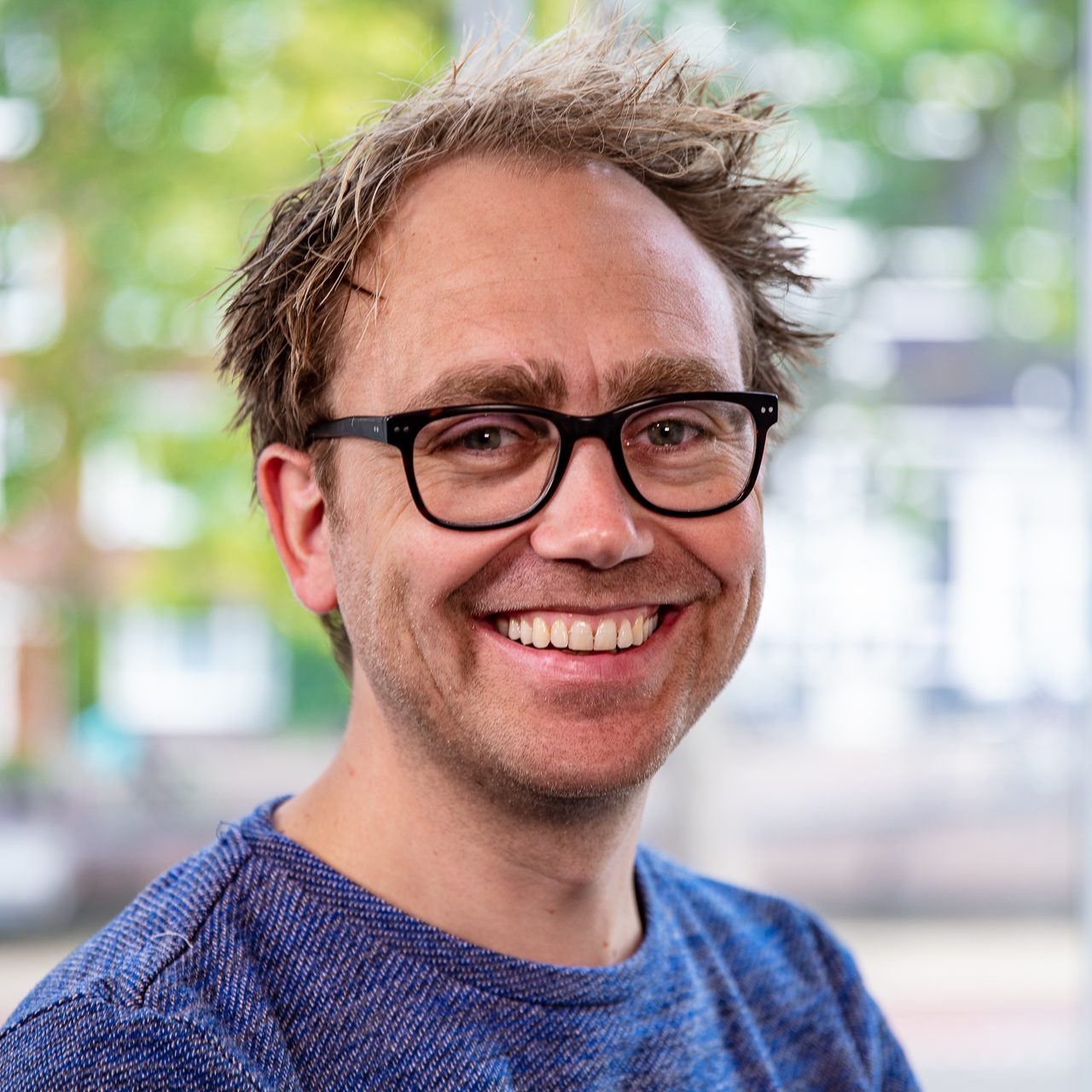
Tijs Stehmann
Medical consciencePaediatrician & founder Ask Aletta
"A family with seven children rarely greets the advent of an eighth with great enthusiasm -- still less so when the current youngest is already entering its fourth year and the parents confidently assume that their brood has reached its limit. It was indeed my doubtful privilege to enter the world on February 9, 1854, as the eighth child of the doctor's family in Sappemeer. Nonetheless my birth was the cause of sincere rejoicing."
That's how Aletta Jacobs opens her memoirs. February 9, 1854. A village in Groningen. The eighth child in a doctor's family of eleven. She'd be 172 today.
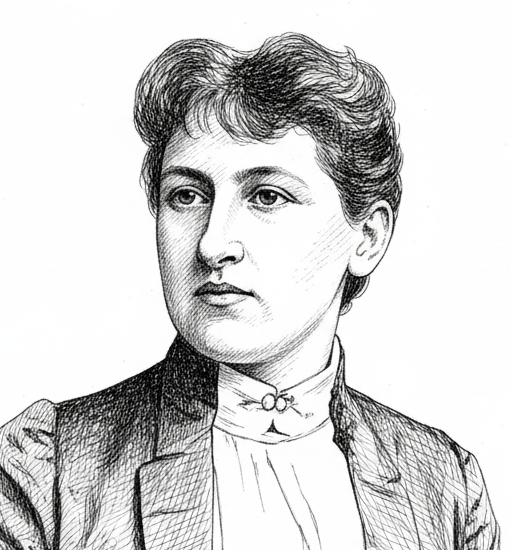
At age six she announced she wanted to be a doctor. At sixteen she passed her pharmacist's assistant exam in Amsterdam – the youngest candidate, so small she had to stand on a footstool to prepare the prescriptions. At seventeen she wrote to the prime minister to demand university admission. At twenty-five she became the first woman in the Netherlands to earn a medical doctorate. She went on to run free clinics for the poor, introduce contraception as a medical practice, lead the Dutch suffrage movement, and organize an international peace congress during a world war. By the time she was done, she had changed Dutch healthcare, and Dutch society, in ways that still hold.
More than a list of firsts
It's easy to reduce Aletta Jacobs to a timeline of milestones. First woman at a Dutch university. First female Dutch physician. First birth control clinic in the world. The Wikipedia version is impressive enough. But the milestones miss the character behind them.
When people asked her about choosing medicine, she was blunt: "There's no point in thinking things over. I know exactly what I want to do and I have known for ages." She was seventeen. She had written to Prime Minister Thorbecke without telling her parents. He granted permission within a week.
From 1882 to 1894 she ran free clinics for underprivileged women in Amsterdam, twice a week, seeing up to eighty women per week. Twelve years, unpaid. During these clinics she saw women who could not survive another pregnancy, and began prescribing the Mensinga pessary as contraception. She is widely considered the first doctor in the world to do so. She incurred "the wrath of the entire medical establishment" for it, and she knew she would. "Not for one moment did I delude myself that I would be supported by many of my fellow doctors," she wrote.
In 1915 she organized the International Congress of Women at The Hague, bringing together over a thousand women from twelve countries while the war raged around them. That September she met President Wilson to argue for American peace mediation. Her assessment was characteristically direct: "My impression during this visit was that Woodrow Wilson was a man of high ideals, but that he lacked the power to realize them."
A pattern of barriers
Look at what connects these things, and a pattern emerges. Aletta Jacobs spent her life identifying barriers that kept people from healthcare, knowledge, and rights, and then dismantling them. One by one.
When she fought for her own university admission, she didn't stop at getting in. She fought so the next woman wouldn't need ministerial permission at all. Her one-year probationary period at the University of Groningen wasn't just about her own performance. The future of women's higher education in the Netherlands depended on it.
Her father had given her a writing exercise as a girl: "The cultivation of knowledge for the sake of the common good is the highest of all pursuits." She took it literally. She created a free clinic so that poverty wouldn't prevent a woman from seeing a doctor. She made reproductive health information accessible despite the outrage of clergy "who would denounce contraception from the pulpit and then pack their wives off to my office."
When she tried to register as a voter – she met the income requirement as a physician – the response was not to grant her the vote, but to explicitly exclude all women from the Dutch constitution. She spent the next three decades getting that reversed. In 1911 and 1912, she traveled three continents with American activist Carrie Chapman Catt to advance women's rights, meeting presidents and prime ministers along the way. In September 1919, women's suffrage finally became law. Aletta was sixty-five.
The connecting principle across all of it: access to knowledge should not depend on who you are.
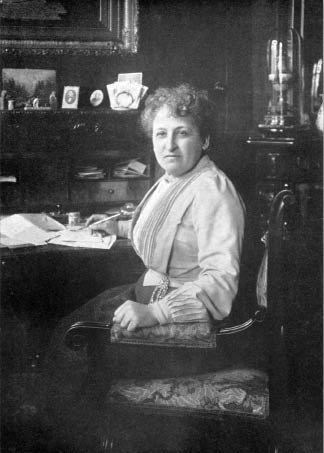
Aletta everywhere
Sometimes she seems to follow you. Between 2012 and 2016, I did my medical exams in Groningen – in the Aletta Jacobshal. Years later, as a pediatrician at Noordwest Ziekenhuis in Alkmaar, I sometimes play piano in the Aletta Jacobshall. Wherever I go, Aletta Jacobs is always there.
Why her name is on our product
The barrier Aletta Jacobs fought has a modern equivalent. In her time, it was laws and conventions that kept people out. Today, it is the fragmentation and complexity of knowledge itself. Medical knowledge today is scattered across hundreds of guidelines, databases, and systems. A doctor who needs an answer often spends more time searching than thinking. The knowledge exists. Finding it is the problem.
Her mission was to make healthcare accessible to everyone who needed it. Ours is narrower but follows the same line: we want no healthcare provider to waste time searching for information that already exists.
She insisted on evidence-based practice long before the term was coined. She prescribed the Mensinga pessary not out of ideology but because the clinical evidence supported it, and because her patients needed it. Ask Aletta draws exclusively from verified clinical guidelines and peer-reviewed literature for similar reasons. Not because it's a selling point, but because that is how medical information should work.
We should be honest about the scale difference. Aletta Jacobs changed a society. We build an AI search tool. But the principle is shared: the right knowledge, accessible to the people who need it, without unnecessary barriers.
Fighting for what is right
Near the end of her memoirs, Aletta Jacobs wrote:
"I am still more grateful that I have been able to witness the actualization of three factors vital to the improvement of women's lives and happiness. With my support, women's political and economic independence and planned parenthood have become a reality in the Netherlands. Hence, when my time comes, I will feel free to say that I have contributed to making the world I leave a better place for women than the world I entered."
She died on August 10, 1929, in her sleep, at the Badhotel in Baarn. She was seventy-five. The girl from Sappemeer who had to stand on a footstool – and never let anyone's doubts determine what she could achieve.
172 years later, we think about that passage every day. Not as a slogan on a wall. As a directive for the work we do.
Happy birthday, Aletta.