Ask Aletta now asks questions back

Aram Zegerius
Technical conscienceA good AI answer starts with a good question. In practice, however, many questions are only a few words long or leave out context that could materially change the answer.
Until now, an AI assistant would usually fill in those gaps itself. It would assume the most common situation, produce a generic answer and leave it to the user to check whether those assumptions were correct.
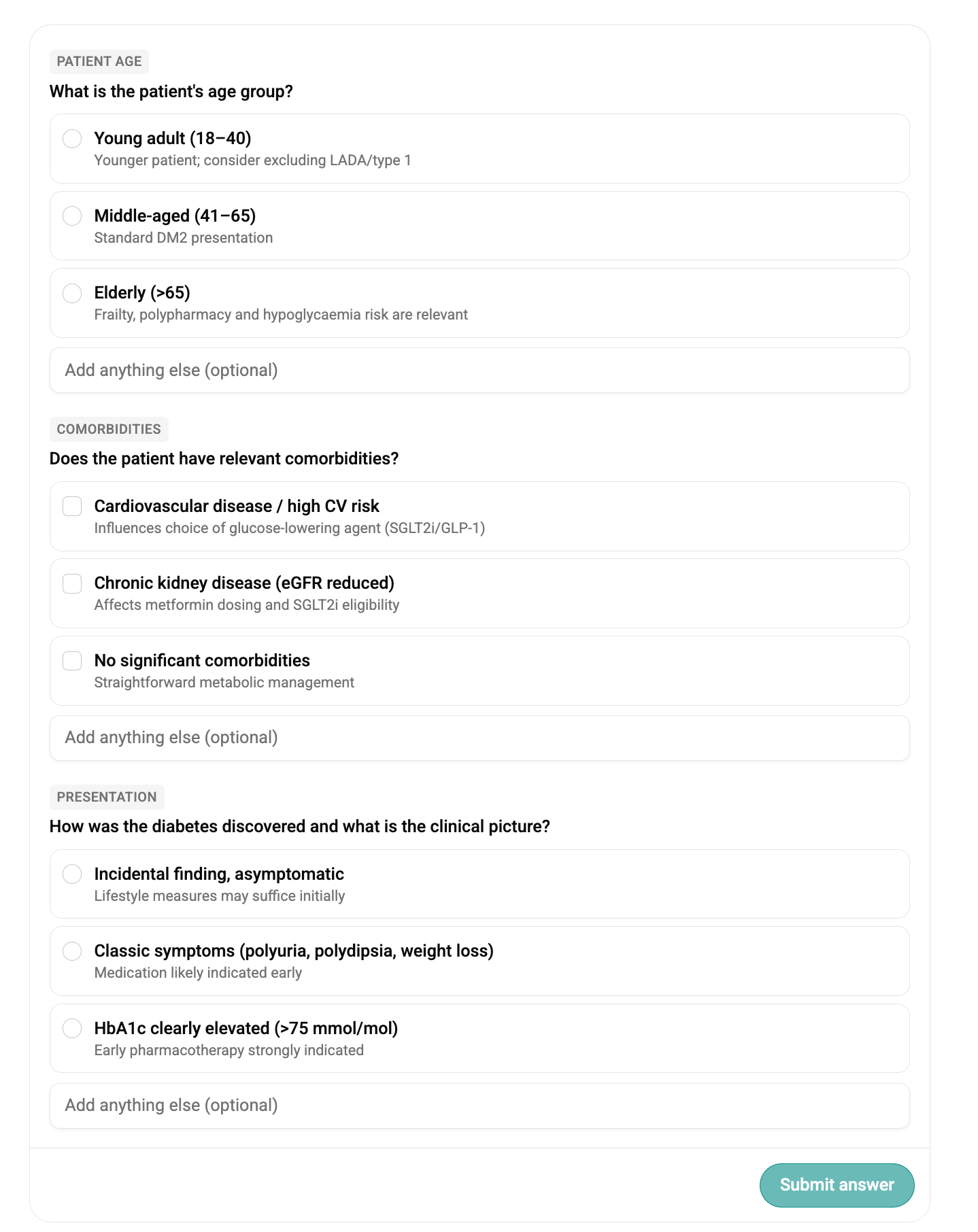
Ask Aletta now takes a different approach. When it does not yet have enough information to understand what the user is trying to achieve, it asks a small number of focused follow-up questions before answering.
Helping people use AI well
We have a history of building features that help people get more out of Ask Aletta.
We warn users when they are about to share personally identifiable information, before that information is sent for processing. Our prompt coach provides up to three suggestions for making a question more precise. We also maintain a growing prompt library where users can discover useful applications and start with a proven prompt, leaving only the relevant context for them to complete.
These features contribute to AI literacy: the knowledge and skills people need to use AI effectively and responsibly. The EU AI Act rightly requires providers and deployers of AI systems to take measures to ensure a sufficient level of AI literacy among the people who work with those systems.
But regulation is not the reason we started building these features. We build them because better use leads to better outcomes, faster adoption and ultimately more value for healthcare professionals. Many of our customers tell us that this guidance is one of the reasons they choose Ask Aletta.
When important context is missing
The principle “garbage in, garbage out” applies to every AI model. Our product design philosophy is therefore to make it as easy as possible to get a useful result, even when the first input is incomplete.
We frequently see questions consisting of only a few words. Other questions are clearly phrased but omit information that is necessary for a specific answer.
A question about a clinical guideline, for example, may have a different answer depending on whether it concerns a baby, a child, an adult or an older patient. The relevant steps may also change because of comorbidities, kidney function, current medication or the severity of the clinical presentation.
The same applies to drafting. Asking an AI assistant to write a patient message without specifying the intended outcome, relevant patient characteristics or prescribed treatment will usually produce a generic template. It may sound convincing while still missing information that matters in that particular situation.
From assumptions to questions
Consider this request:
Draft a message with instructions about allopurinol. Explain what the patient needs to know about taking it, possible side effects and what to do if they have questions.
Previously, Ask Aletta would have drafted a general message based on the most common scenario. The healthcare professional would then have needed to check whether its assumptions matched the patient's situation.
Ask Aletta now first asks for the context that could affect the document, such as:
- What are the prescribed dosage and timing?
- What is allopurinol being prescribed for?
- Are there relevant patient factors, such as reduced kidney function, that need to be considered?
The healthcare professional remains in control and supplies the missing clinical context. Once those questions have been answered, Ask Aletta can produce a document that is specific to the intended situation rather than a generic template built on hidden assumptions.
Ask first, answer second
This may appear to be a small interface change, but it represents a meaningful shift in how people work with AI.
Most AI tools are designed to answer immediately. That can make them feel fast, but speed is not useful when the system has misunderstood the question or silently filled in a crucial gap.
Sometimes the best way for an AI assistant to help is not to answer straight away. It is to recognise what it does not yet know, ask the right questions and only then continue.
That is what Ask Aletta now does.